This week’s school lecture introduced information about smart city, and the lecturer focused on the development of smart city in Sydney and India. Smart city is a very interesting concept, firstly, Smart city needs to collect big data. Secondly, it needs to further analyze the data and filter out useful information. Finally, the government needs to provide this information to the public in an appropriate way. With more information, more choices will be to improve the living quality of people who lives in the city. In addition to improving the living quality, the application of smart city can also improve the efficiency of resource utilization and optimize urban management, which is essential to modern city, especially metropolitan that is too big to have it under control without information.
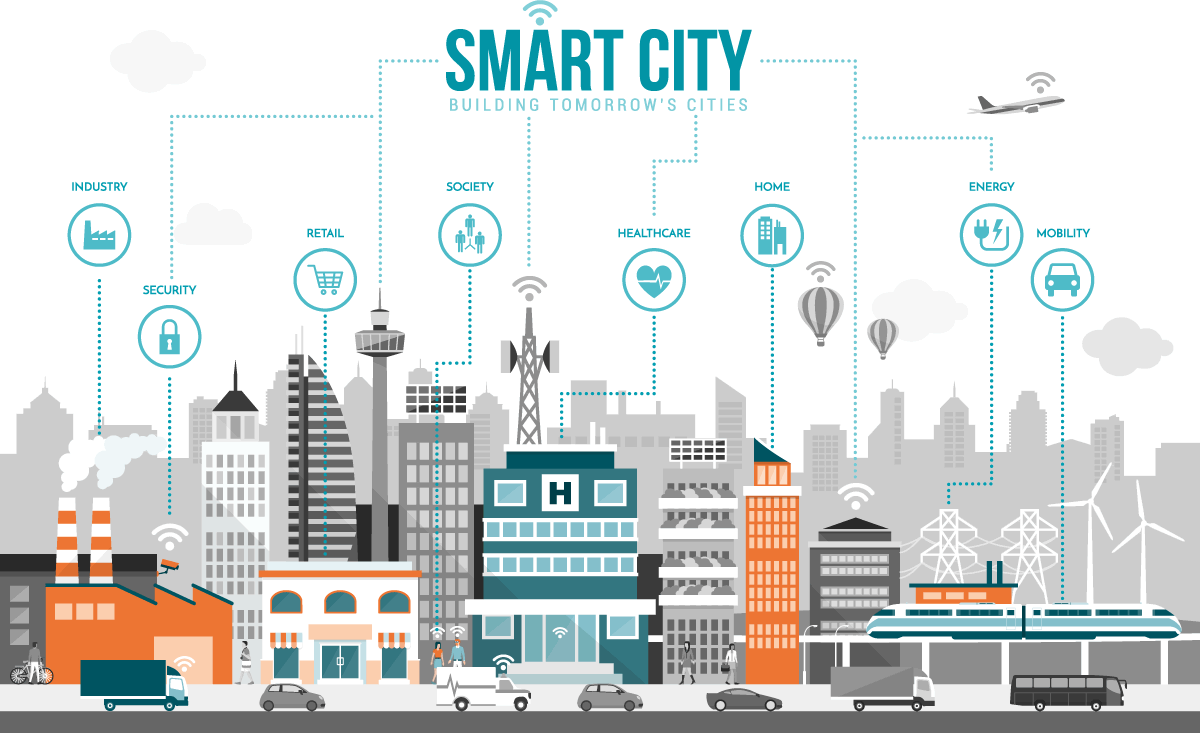
Smart city contains the aspects of social, environment, and economic. In addition, smart city also has high requirements for the government. The government has played a guiding role in the implementation of smart city, especially in the areas of legislation, policy implementation, government planning and education. Although these parts are compared to ‘Invisible’, they are the most critical.
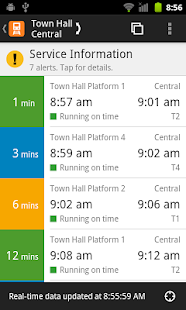
The part that can be applied most in real life I think is transportation. Now many cities has launched a mobile app for transportation to help the public get a clear view of the time when the bus or subway comes, or update the road information in real time through data analysis. For example, there is an App called TripView in Sydney. This software will tell the user the specific information of the required transportation and update the arrival time in real time, so that the people can shorten the waiting time and improve efficiency.
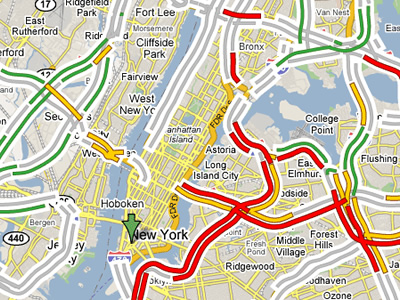
The same technology is also applied to Google Map, google update the traffic conditions of cities in the world through satellite monitoring and transmission of global real-time data. Travel information provided by Google can be obtained in any country, so as to avoid complicated road condition and improve travel efficiency.
But there are many controversial discussions about the implementation of smart city, including the language barriers of users and whether information collection can invade public privacy. Personally, these concerns are not entirely unreasonable. The same data used on the app can be used in more unknown areas. The general public has no way of knowing exactly where this information is being applied. With the continuous advancement of modern technology, smart phones, surveillance cameras, are everywhere in people’s lives, as long as there is technology involved, no privacy is safe. Is this technological advancement what people want? I believe there is no definitive answer to this question.
Reference
McLaren, Duncan; Agyeman, Julian (2015). Sharing Cities: A Case for Truly Smart and Sustainable Cities. MIT Press
Peris-Ortiz, Marta; Bennett, Dag R.; Yábar, Diana Pérez-Bustamante (2016). Sustainable Smart Cities: Creating Spaces for Technological, Social and Business Development. Springer

 Best Moving Forward