With the advancement of urbanization, how to solve a large amount of urban domestic garbage has become a thorny issue. Unlike in the past, modern garbage becomes too much to be easily disposed in landfill, in that case, more complex management methods need to be applied. Not only that, urban waste contains enormous value potential, and a large amount of recyclable waste is mixed into the rest of the garbage, resulting in huge waste of resources.
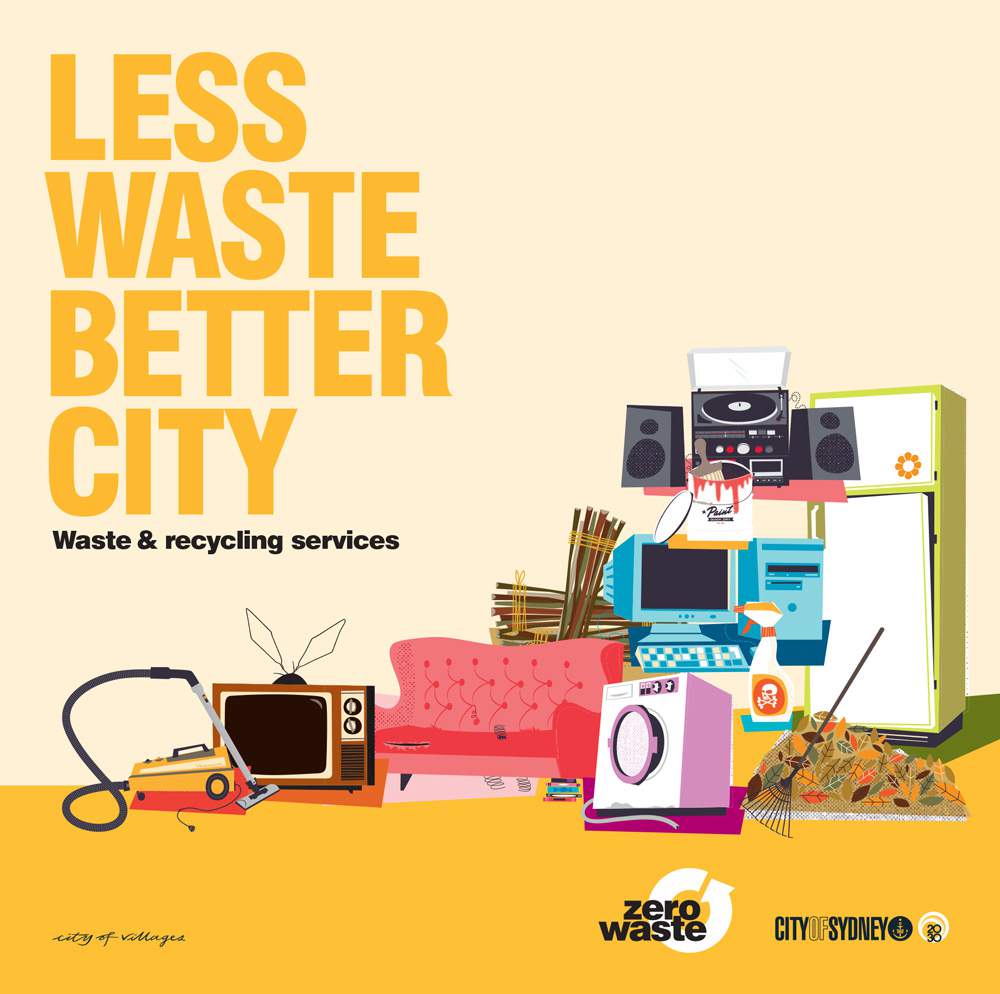
To respond more effectively to the increasing demand for resources, Waste management is proposed under this context. Waste management (or waste disposal) are the activities and actions required to manage waste from its inception to its final disposal. City of Sydney applied waste strategy and action plan 2017–2030 outlines waste management action to achieve zero waste target by 2030.
Each floor in Sydney’s apartment building is generally equipped with a chute to collect household waste and a public space to collect recyclable waste. Picture shown as below is the recycle waste bin in building I live. It can be seen from the figure that the trash can has been piled up, but it has not been cleaned up in time, and the garbage has spilled onto the floor.
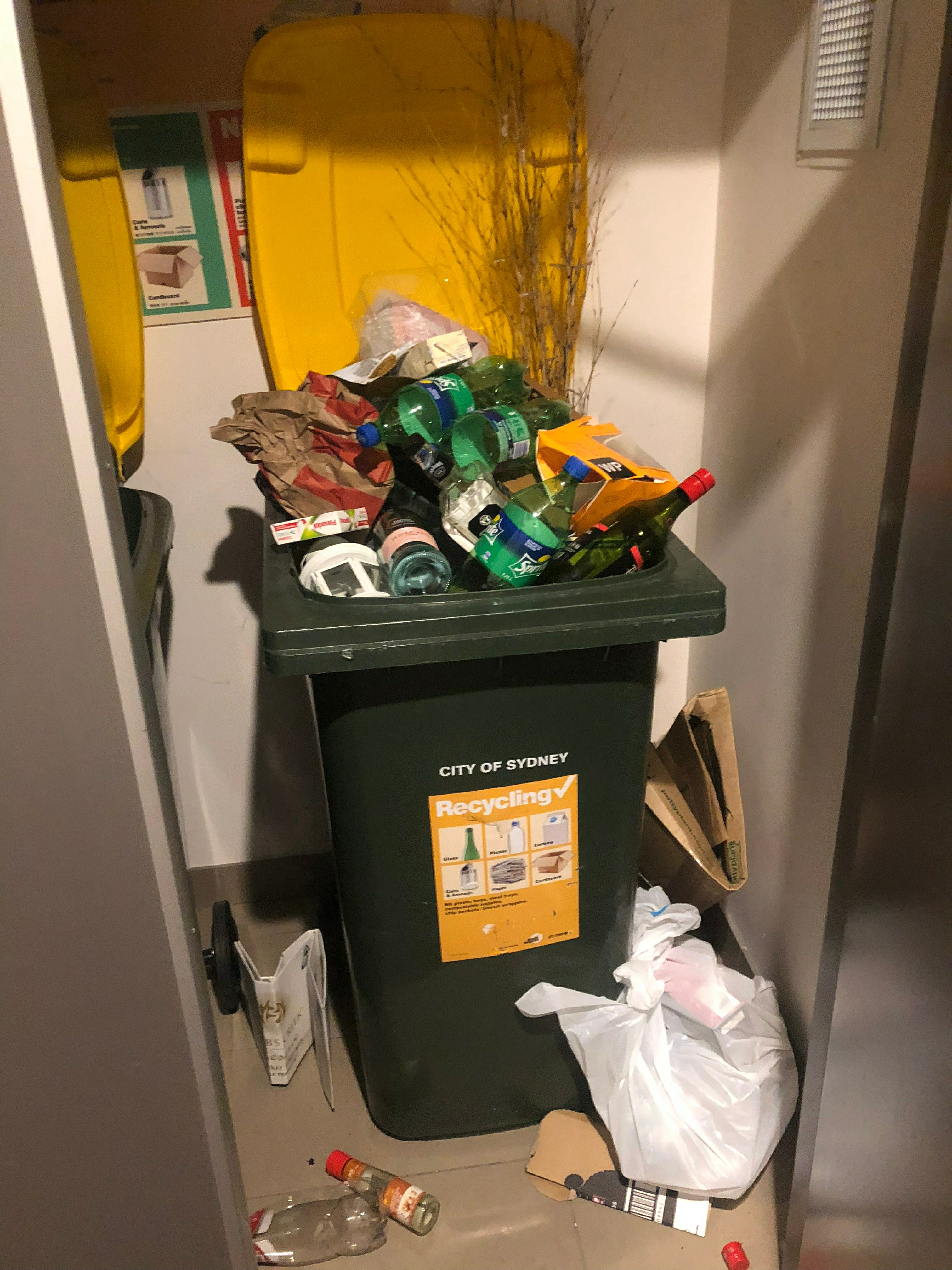
I think this picture reflects two problems. First, although there is policy support for waste management, it has not been effectively implemented in actual implementation, resulting in recycling garbage has been neglected in the building management. Second, the recyclable waste bin hasn’t been sort out in detailed. The bottle, which is made of glass, and the cardboard and plastic product are collected together, increasing further work to the classification process. If waste bin can sort different kinds of recyclable garbage, it will be more efficient.
According to what I have observed, waste management in Sydney still needs to pay more attention rather than staying in the policy, which means more education and publication needed.
Youtube Video
Reference
‘Glossary of environmental and waste management terms’, Handbook of Solid Waste Management and Waste Minimization Technologies. Butterworth-Heinemann. 2003. pp. 337–465.
‘Guidelines for National Waste Management Strategies Moving from Challenges to Opportunities (PDF)’, United Nations Environmental Programme. 2013.

 Best Moving Forward