Environmental degradation is a hot topic in recent years. Buildings account for nearly 40% of global energy, and emit over 30% of GHG emissions. Therefore, integrating sustainable measures into architectural design is the future trend of development.
As a cosmopolitan city, Sydney also has a sustainable city vison called sustainable Sydney 2030, to make Sydney ‘Green, Globe and Connected’, which including architecture aspect.
Here is the link of Sydney sustainable 2030 vision: https://www.cityofsydney.nsw.gov.au/vision/sustainable-sydney-2030
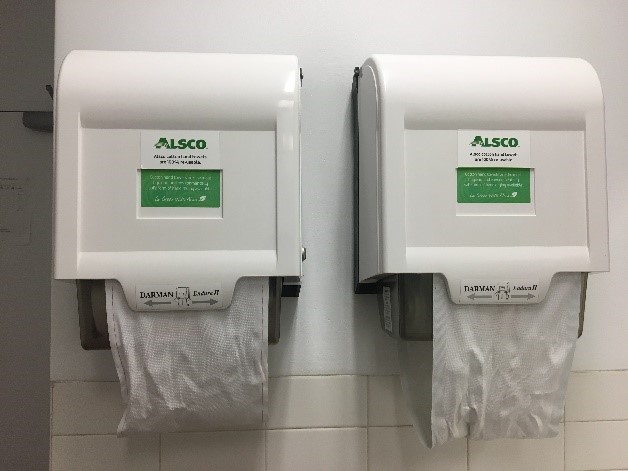
In order to achieve this goal, Sydney’s architectural design reflects environmental considerations in all aspects. The picture was taken on the UNSW campus, compared to traditional paper towels, UNSW uses recyclable hand rubbing cloth as shown. The paper towel not only consumes resources, but also cannot be reused. The hand rubbing cloth only needs to be cleaned regularly to achieve the purpose of re-use, which fundamentally reduces the use of resources, indirectly reduces the embodied energy, and indirectly reduces carbon emission.
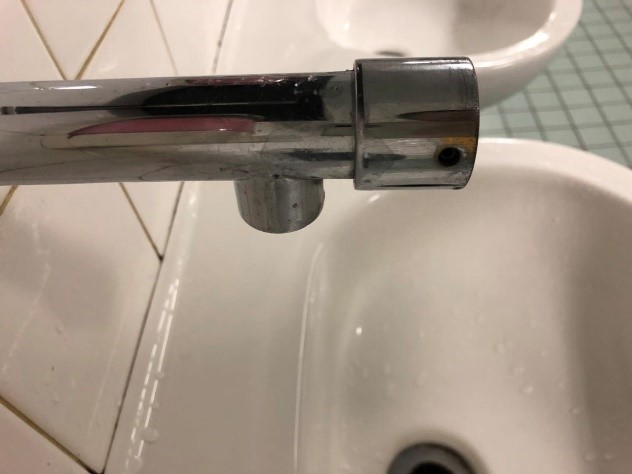
The second picture is also taken on the UNSW campus. According to my observations, people usually get used to keep the faucet running when using hand sanitizer. When using traditional faucet, due to this habit, water often been wasted. However, the faucet of UNSW adopts a pressing design. The water runs for 5 seconds each time people pressed, in this case, the water will stop running automatically when using hand sanitizer, which ensuring the water is not been wasted.
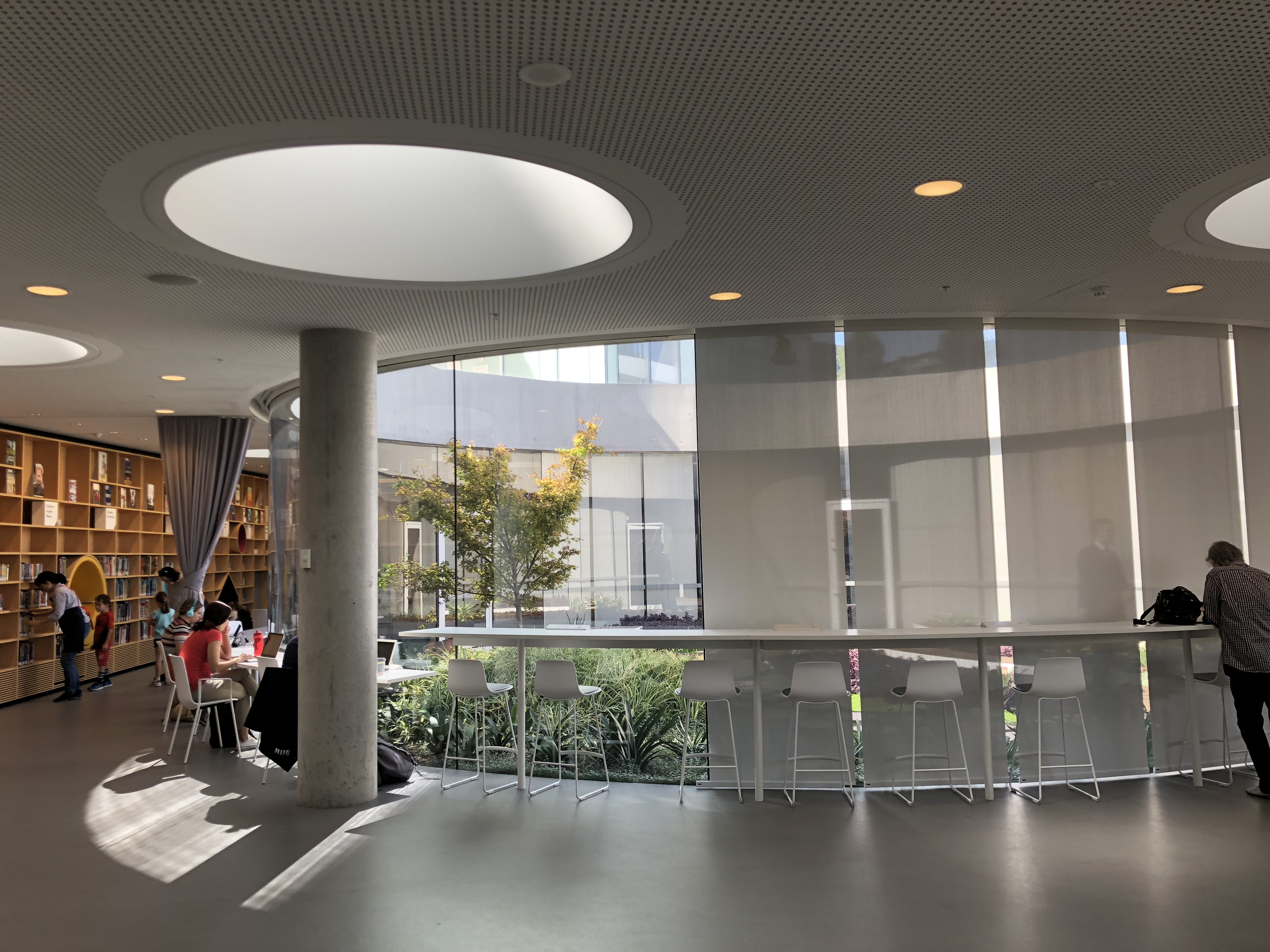
The third picture Photographed in the Green square library, Green Square area is the largest historic block renovation project of Sydney, transforming from industrial area to commercial and residential area. The Green square library is the most important public space in the area. As can be seen from the figure, the sunken library adopts an atrium to connect the indoor and outdoor spaces, and introduce outdoor sunlight into the library, reducing the dependence on the lighting in the daytime. On the other hand, the landscape design in the atrium and the natural light design are also part of the biophilic design, which can effectively improve the comfort of the human body in space and promote health both mentally and physically.
Reference
Charter, M./ Tischner, U. (2001), ‘Sustainable Solutions. Developing Products and Services for the Future’. Sheffield, Greenleaf
McLennan, J. F. (2004), ‘The Philosophy of Sustainable Design ‘
Heerwagen, Judith H., et a, 2008, Biophilic Design: the Theory, Science, and Practice of Bringing Buildings to Life. Wiley,

 Best Moving Forward